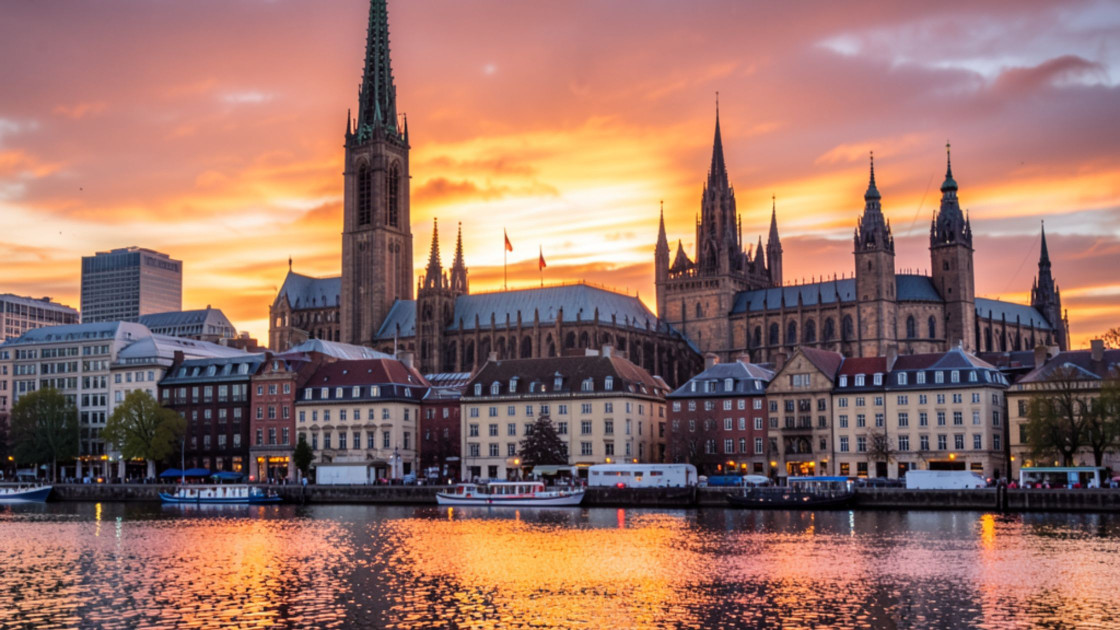
Welcome to the Fair City. Dublin, the capital of the Republic of Ireland, is a place where the air is thick with history and the streets echo with the "craic"—that uniquely Irish blend of wit, conversation, and conviviality. Unlike the sprawling metropolises of London or Paris, Dublin feels intimate, walkable, and deeply welcoming. Whether you are tracing the footsteps of literary giants like James Joyce, exploring Viking foundations, or seeking a modern adventure, this city is a treasure trove of experiences.
At Competitours, we believe that travel is best served with a side of the unexpected. Dublin’s winding cobblestone streets and vibrant culture make it a perfect destination for those who want to do more than just sightsee. This guide—The Ultimate Travel Guide for Dublin—is designed to help you navigate the city’s most iconic landmarks while keeping that spirit of discovery alive.
Before you cross the Irish Sea, you may be considering the broader context of your trip. Timing is everything when it comes to the unpredictable Irish weather. To find the perfect window for your trip, read our guide on the best time to visit Europe.
1. Navigating Dublin: Logistics and Entry
Entry Requirements
Ireland is not part of the Schengen Area, meaning it maintains its own immigration rules. While many nationalities can enter visa-free for tourism, it is vital to verify the current requirements based on your passport.
-
Official Resource: Check your visa status and entry rules at the Irish Department of Foreign Affairs (.gov.ie).
Customs and Borders
If you are arriving from outside the EU, be aware of the duty-free allowances and prohibited items. Ireland has strict agricultural controls to protect its unique ecosystem.
-
Official Resource: Review the rules for travelers at the Irish Revenue Customs page (.gov.ie).
Getting Around
Dublin is a remarkably compact city. Once you are in the city center, most landmarks are within a 20-minute walk of each other. For longer distances, the DART (Dublin Area Rapid Transit) train offers beautiful coastal views, while the Luas (tram) and extensive bus network cover the urban sprawl.
-
Official Resource: Plan your local transport and check fares at the National Transport Authority (.gov.ie).
If you are using Dublin as a base to explore further afield, you might consider hopping across the water for a weekend of mystery. For the truly adventurous, exploring mystery flights in the UK can add a layer of excitement to your broader European itinerary.
2. Five Iconic Dublin Landmarks
To truly understand Dublin, you must visit the sites that shaped its identity. Here are five landmarks you cannot miss, complete with directions from Dublin Airport (DUB).
1. Trinity College Dublin & The Book of Kells
Founded in 1592, Trinity College is Ireland’s oldest university. Its crown jewel is the Book of Kells, a 9th-century manuscript of the four Gospels, famous for its intricate, vibrant illustrations. The manuscript is housed in the "Long Room" of the Old Library—a breathtaking, barrel-vaulted space that looks like something straight out of a fantasy novel.
-
Address: College Green, Dublin 2, Ireland
-
Phone: +353 1 896 1000
-
Google Maps: View on Google Maps
-
Directions from Dublin Airport: * Take the Dublin Express (Route 782) or Aircoach (Route 700) from the airport terminal.
-
Alight at the Aston Quay or Trinity College stop. The main entrance is directly across from the stop. Total travel time is approximately 30–40 minutes.
-
2. Guinness Storehouse
You haven't truly been to Dublin until you’ve visited the home of the "Black Stuff." Located in the heart of the St. James’s Gate Brewery, the Storehouse is a seven-story immersive experience that teaches you the history and craft of brewing Guinness. The journey ends at the Gravity Bar, offering a 360-degree panoramic view of the city.
-
Address: St. James's Gate, Dublin 8, Ireland
-
Phone: +353 1 408 4800
-
Google Maps: View on Google Maps
-
Directions from Dublin Airport: * Take the Aircoach (Route 700) to the O'Connell Street stop.
-
From there, take the Luas Red Line (towards Tallaght or Saggart) and get off at the James’s stop. It is a 5-minute signposted walk to the entrance. Total travel time is about 55 minutes.
-
3. Kilmainham Gaol
For a sobering but essential look at Irish history, visit this former prison. It held many of the most famous Irish revolutionaries, including the leaders of the 1916 Easter Rising. The guided tours are incredibly moving and offer deep insight into the struggle for Irish independence.
-
Address: Inchicore Rd, Kilmainham, Dublin 8, Ireland
-
Phone: +353 1 453 5984
-
Google Maps: View on Google Maps
-
Directions from Dublin Airport:
-
Take the Dublin Express (Route 782) to Heuston Station.
-
From Heuston, it is a 15-minute walk, or you can take a short 5-minute ride on bus 60, 69, or 79. Total travel time is roughly 50 minutes.
-
4. St. Patrick’s Cathedral
Built in honor of Ireland’s patron saint between 1220 and 1260, St. Patrick’s is the National Cathedral of the Church of Ireland. It is a stunning example of Gothic architecture and is the final resting place of Jonathan Swift, the author of Gulliver’s Travels, who was the Dean here in the 1700s.
-
Address: St Patrick's Close, Wood Quay, Dublin 8, Ireland
-
Phone: +353 1 453 9472
-
Google Maps: View on Google Maps
-
Directions from Dublin Airport:
-
Take the Aircoach (Route 700) to Kildare Street.
-
It is a pleasant 12-minute walk west through the historic Liberties district to reach the Cathedral. Total travel time is approximately 50 minutes.
-
5. Dublin Castle
For over 700 years, this was the seat of British rule in Ireland. Today, it is a major government complex used for state presidential inaugurations. You can tour the opulent State Apartments, the medieval Undercroft, and the Chapel Royal.
-
Address: Dame St, Dublin 2, Ireland
-
Phone: +353 1 645 8813
-
Google Maps: View on Google Maps
-
Directions from Dublin Airport:
-
Take the Dublin Express (Route 782) to the Temple Bar (Wellington Quay) stop.
-
Walk south for 5 minutes toward Dame Street, and the castle entrance will be on your right. Total travel time is about 40 minutes.
-
3. Adventure and Mystery in the Pale
Dublin is a city that begs to be played with. If you are traveling with a team or looking for a way to break out of the standard "tourist bubble," why not gamify your experience? Dublin’s mix of narrow alleys and wide Georgian squares provides the perfect backdrop for amazing race challenges. Imagine racing to find a specific statue in St. Stephen's Green or solving a riddle that leads you to the oldest pub in the city.
Expanding Your Horizons from Dublin
Dublin is the gateway to the rest of the continent. Once you’ve mastered the Liffey, you might find yourself craving the thrill of the unknown. For those who want to experience the ultimate spontaneity, Europe mystery flights are a fantastic way to extend your journey.
Dublin Airport offers excellent connections to dozens of hidden European gems. You could find yourself having breakfast in a Dublin café and dinner in a medieval square in Prague or a seaside bistro in Lisbon. For an even more curated experience, check out our full mystery trips in Europe, where we take the stress of planning off your shoulders and replace it with the magic of surprise.
4. Insider Tips for the Perfect Dublin Stay
-
The Weather Rule: In Ireland, you can experience all four seasons in a single hour. Always carry a light, waterproof jacket—even if the sun is shining when you leave your hotel.
-
Beyond Temple Bar: While Temple Bar is famous for its atmosphere and live music, it is also the most expensive area for a drink. For a more authentic local experience, head to the pubs on Whelan’s on Wexford Street or the creative spots around Smithfield.
-
Leap Card: If you plan on using public transport more than a couple of times, buy a Visitor Leap Card. It offers unlimited travel on the bus, Luas, and DART for 1, 3, or 7 days.
-
Tipping: Tipping in Ireland is appreciated but not mandatory. In restaurants, a 10-12% tip is standard for good service. In pubs, you generally don't tip for a drink at the bar, but you might leave a small amount if you have table service.
Dublin is a city that stays with you long after you leave. It is a place of stories, songs, and spirit. By combining the historical depth of its landmarks with the adventurous spirit of a Competitours-style journey, you are guaranteed a trip that is as unique as the city itself.
Updated for 2026 FAQ for Traveling in Dublin:
We get many traveler questions about Dublin, Ireland - here are the most popular questions and our answers:
1. Do I need a visa or an Electronic Travel Authorisation (ETA) to visit Dublin?
Since the Republic of Ireland is an independent nation and not part of the UK, you do not need a UK ETA to visit Dublin. Most tourists from the US, Canada, Australia, and the EU can enter Ireland visa-free for up to 90 days.
-
The Northern Ireland Warning: If you plan to take a day trip to Belfast (Northern Ireland), you are technically entering the UK. As of February 25, 2026, the UK strictly enforces the ETA requirement for non-visa nationals. Even if you are crossing the land border by bus or train, you must have your £16 UK ETA approved in advance, or you risk legal complications.
2. What is the best way to get from Dublin Airport to the city center?
Dublin is one of the few major European capitals without a rail link to its airport. You have three main options:
-
Dublin Express (Route 782/784): The fastest bus option, using the Dublin Port Tunnel to avoid city traffic. It costs roughly €10 and drops you at major hubs like Aston Quay or Custom House.
-
Aircoach (Route 700): A 24/7 service that is slightly more comfortable with plenty of luggage space. It costs about €9–€10.
-
Taxi: A taxi to the city center typically costs between €25 and €35. This is often the best value if you are traveling in a group of three or four.
3. Can I use my contactless credit card on Dublin buses like in London?
No. Unlike London, you cannot simply tap a credit card or Apple Pay on a Dublin Bus or the Luas (tram) to pay for a single fare.
-
The Leap Card: To get the best rates, you must buy a Leap Card. You can get a "Visitor Leap Card" at the airport (Wrights or Spar) for €8 (1 day) or €18 (3 days).
-
The 90-Minute Fare: If you use a standard Leap Card, Dublin operates a "TFI 90" fare, which allows you to switch between buses, the Luas, and the DART for just €2 within a 90-minute window.
4. How far in advance should I book the Guinness Storehouse and Book of Kells?
Both of these attractions are almost always sold out for "walk-ins."
-
Guinness Storehouse: Book at least 72 hours in advance to secure your preferred time slot. Prices are dynamic—booking early online can save you up to 20% compared to last-minute tickets.
-
The Book of Kells: This is even more restricted. You should book 1–2 weeks in advance, especially during the summer. Since the "Old Library" is currently undergoing a massive restoration project, ticket availability is more limited than in previous years.
5. Is Dublin safe for tourists, and what scams are common in 2026?
Dublin is generally safe, but like many cities, it has seen a rise in phone snatching.
-
The "Moped Grab": Thieves on e-bikes or scooters often target tourists holding phones near the curb on O'Connell Street or near Temple Bar. Keep your phone in an inner pocket when walking near the street.
-
Temple Bar Prices: While not a "scam" per se, be aware that a pint in the Temple Bar area can cost nearly double what it costs just three streets away in a local pub.
6. What is the etiquette for ordering a pint of Guinness?
Ordering "the black stuff" is a ritual in Dublin.
-
The Two-Part Pour: A proper Guinness takes exactly 119.5 seconds to pour. The bartender will fill the glass three-quarters of the way, let it settle, and then top it off.
-
The Golden Rule: Never, ever try to grab the glass before the bartender has finished the second pour and handed it to you. It is considered a major faux pas.
7. Do I need to carry cash for pubs, or is card accepted?
Post-2020, Dublin has become very card-friendly. Almost every pub, including the oldest traditional spots, accepts contactless and chip-and-pin. However, if you venture into very rural parts of Ireland on a day trip, it is always wise to have €20–€30 in cash for small "mom-and-pop" shops or pubs that may have a minimum card spend.
8. What is the tipping culture in Irish restaurants and pubs?
-
Restaurants: A tip of 10–12% is standard for good service. Always check the bill first; some places add a "Service Charge" (discretionary), in which case you don't need to add extra.
-
Pubs: If you are ordering at the bar, you do not need to tip. If you have a dedicated server bringing drinks to your table all night, rounding up to the nearest €5 or €10 at the end of the night is a nice gesture but not expected.